Prevention is more effective than treatment.
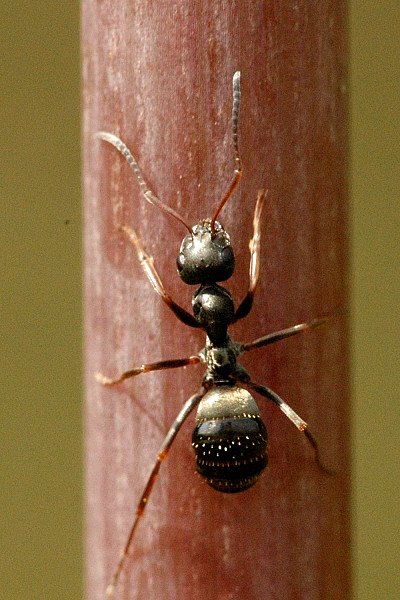
Ants are very small creatures. Even through a very small hole, an entire colony of ants can enter your house. If the house is not completely sealed, ants will definitely come inside. It is difficult to keep the house completely safe from ants. Once they find a way to enter the house in search of food, hundreds of thousands of worker ants start actively bringing food for the colony. Eliminating an ant infestation takes time and continuous effort. Prevention is much easier than eliminating them.
The EPA’s Integrated Pest Management framework prioritises making your environment unsuitable for pests (cultural and physical controls) before relying on chemical controls. Here are practical steps.
Cleanliness: Remove attractants.
Image source: Wikimedia Commons
Inside:
-
Store all food in airtight, sturdy containers (glass jars, rigid plastic/acrylic containers, stainless steel containers, etc.). Ants and other pests (such as rats or grain bugs) can detect food odours from a great distance. Ants can penetrate cardboard, paper, and many thin plastic bags.
-
Clean up food crumbs and spilt liquids immediately, especially in the kitchen, around the stove, dining table and inside cabinets.
-
Clean countertops and stovetops thoroughly after cooking.
-
Empty and clean trash cans regularly. If ants start appearing, install tight-fitting lids on trash cans.
-
Clean under and behind appliances (refrigerators, ovens, and microwaves) frequently—food particles tend to accumulate in these areas.
-
Clean any sugar residue from bottle/jar lids and caps before storing.
-
Wash recyclable items before putting them in the trash.
Moisture Control:
-
Get any leaking pipes under the sink or around appliances (refrigerator, washing machine) repaired immediately.
-
Address moisture issues (especially in bathrooms and basements).
-
Keep bathrooms and shower areas dry. Open a window or turn on an exhaust fan for at least 15–20 minutes to remove moisture from the air.
Exclusion: Close all entrances.
Ants can enter through cracks or holes as small as 1 millimetre. Systematic inspections of your home’s exterior are extremely effective.
What needs to be sealed:
-
Caulk gaps around pipes, conduits, and cables in exterior walls (use silicone caulk or copper mesh).
-
Cracks in the foundation. (If you see small lumps of fine soil or pebbles along the walls or foundation, it’s a clear sign that ants or insects have made their way inside.)
-
Gaps under and around exterior doors (door sweeps and weatherstripping).
-
Cracks around window frames.
-
Gaps between the outer cladding and the foundation.
-
Vents without fine mesh screens (crawlspace and attic vents).
External housing modifications
Source: Wikimedia Commons
Eliminate ant breeding grounds around your foundation:
-
Keep mulch, wood chips, and compost at least 12–18 inches away from the foundation.
-
Move wood storage away from the house (at least 20 feet away).
-
Remove piles of leaves, dry stumps, and rotting wood near the building.
-
Cut back branches and bushes that touch the exterior walls – ants use branches as bridges to enter the house.
Manage humidity in the outdoor environment:
-
Ensure that drains drain water away from the foundation.
-
Repair any damaged drains nearby.
-
Level the soil away from the foundation so that water does not accumulate.
Seasonal perimeter treatment
In homes with high ant infestations (warm climates, forested areas, near large outdoor colonies), a spring spray along the exterior foundation can significantly reduce indoor ant infestations throughout the season.
Apply the residual spray in a 2- to 3-foot strip along the base of the exterior wall, around all door frames, and around all window frames. If there is prolonged rainfall, spray again according to the product label instructions.
Seasonal Checklist
| Season | Action |
|---|---|
| Spring | Apply treatment to the outer perimeter; inspect and reseal cracks in the foundation caused by winter frost. |
| Summer | Check for new ant mounds forming outside; maintain cleanliness; and monitor bait stations if they have already been set up. |
| Fall | Re-inspect and seal all entry points before ant activity increases; remove leaf litter from near the foundation. |
| Winter | Inspect crawl spaces for nesting activity; maintain internal cleanliness. |
→ How to get rid of ants when preventative measures fail → Why ants keep coming back